Specialty Courts in Texas
September Highlights
On Friday, September 18, 2026, Chief Justice Blacklock convened the Texas Judicial Council to take up recommendations from committee chairs as well as OCA program staff. The Texas Specialty Courts Standards for Best Practices and Data Collection was presented for adoption. The document produced by two working groups consisting of dozens of practitioners across the state, and reviewed by national experts as well as those in other states, over a period of 18 months was adopted with a unanimous vote of the Council. It was a labor of love and dedication that will help guide treatment courts in Texas to produce and demonstrate improved outcomes. Thank you to all the members of the workgroups, everyone who reviewed and provided feedback, all the members of the Governor's Specialty Courts Advisory Council, and to the Texas Judicial Council for supporting this initiative. The Texas Standards for Best Practices and Data Collection is now posted under the Best Practices tab!
Overview
Specialty Courts provide specialized direct services (usually substance use or mental health treatment) to participants as an alternative to incarceration in criminal cases or to address child protection issues in civil or family cases. Participants must comply with the terms of the program for typically 12-24 months by remaining clean and sober, not being rearrested, participating in treatment, and attending court review hearings on a regular basis. Specialty Court Programs in Texas must comply with best practice standards approved by the Texas Judicial Council.
There are seven (7) types of Specialty Courts recognized by Statute in Texas:
- Family Treatment Courts
- Adult Treatment Courts
- Veterans Treatment Courts
- Mental Health Courts
- Commercially or Sexually Exploited Persons Courts
- Public Safety Employees Treatment Courts
- Juvenile Family Treatment Courts
In 2019, the 86th Legislature transferred oversight of Specialty Court programs in Texas from the Office of the Governor to the Office of Court Administration under the Texas Judicial Branch through House Bill 2955. As such, OCA is charged with ensuring adherence to best practice standards and offering support and technical assistance to all specialty court programs.
Data Graphics
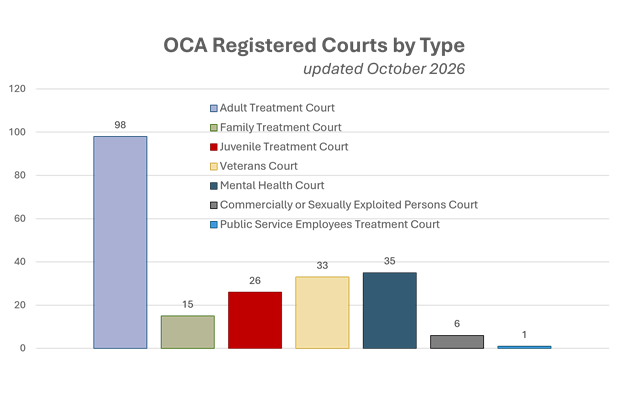
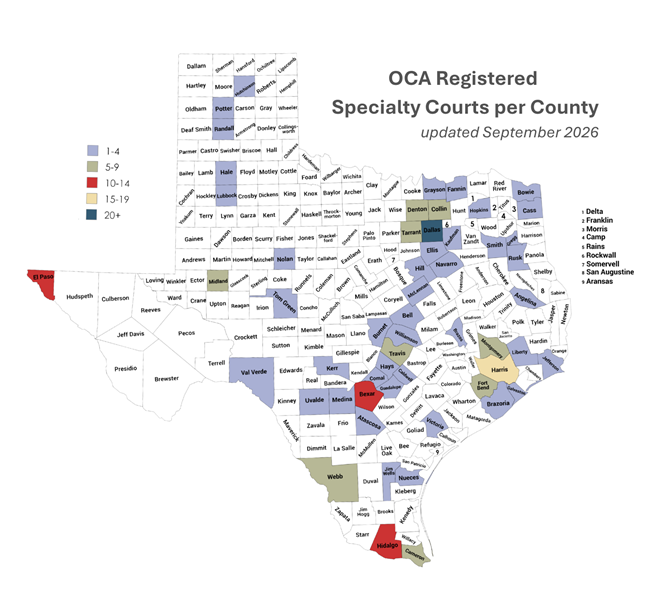
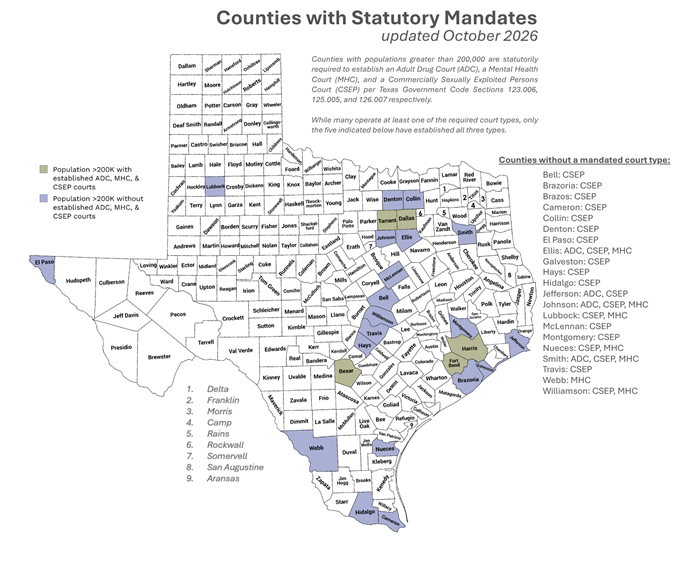
There are currently 214 registered Specialty Courts in Texas. The graphics below highlight the number of courts by type, the number of courts by county, and the counties with statutory mandates for specialty courts. (updated 10/1/2026).
Number of Courts by Type
Number of Courts per County
Counties with Statutory Mandates for Specialty Courts
For questions please contact the Specialty Courts Team!
Program Manager: Erin Morgan or 512-771-0114
Program Specialist: Amber Ward